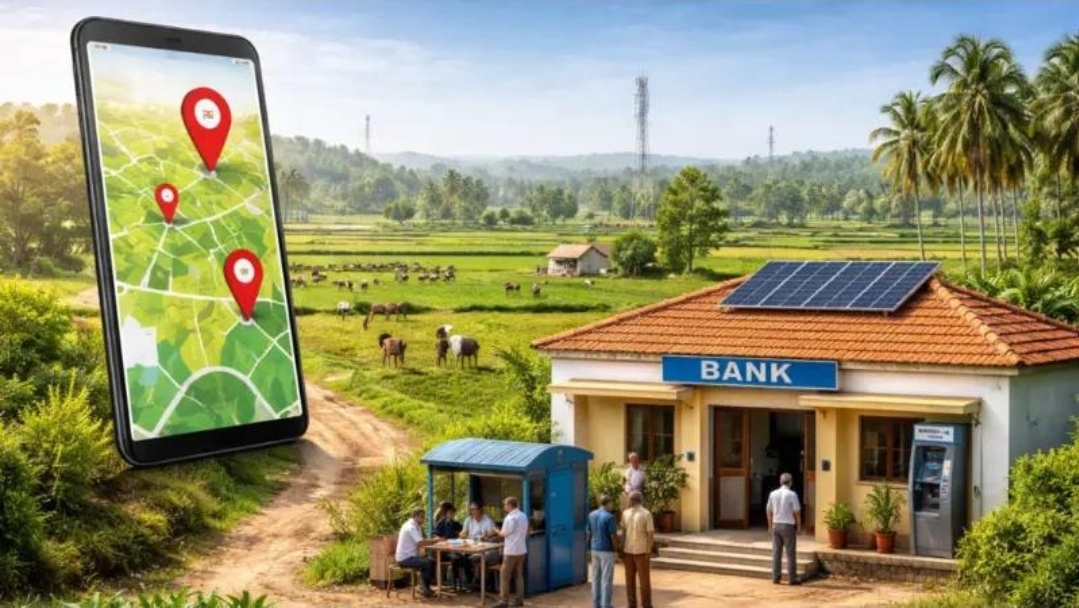
How Small Finance Banks Are Changing Rural India:
For decades, millions of people living in Indian villages struggled to access proper banking facilities. Opening a bank account often meant traveling long distances, waiting in crowded branches, and dealing with complicated paperwork. Farmers, small shopkeepers, daily wage workers, and rural women were mostly dependent on local money lenders who charged extremely high interest rates. But over the last few years, a silent financial revolution has started transforming villages across the country — and at the center of this change are small finance bank institutions.
Today, these banks are not just offering loans and savings accounts. They are bringing hope, financial stability, digital access, and economic opportunities to people who were ignored by traditional banking systems for decades. From promoting digital banking in villages to improving financial inclusion in India, Small Finance Banks (SFBs) are playing a major role in reshaping rural life.
The rise of rural banking in India is not only improving access to money but also helping people dream bigger. Farmers are buying modern equipment, women are starting businesses, students are getting education loans, and villagers are using smartphones for banking transactions. In many ways, SFBs are becoming the backbone of modern rural finance India.
This article explores how Small Finance Banks are changing the rural economy, improving lives, and shaping the future of rural banking in India.
What Is a Small Finance Bank?
A small finance bank is a type of bank created by the Reserve Bank of India (RBI) with a special purpose — to provide banking services to underserved and unbanked sections of society. These banks mainly focus on small farmers, micro businesses, laborers, low-income households, and people living in rural or semi-urban areas.
Unlike large commercial banks that often focus on corporate clients and urban customers, Small Finance Banks concentrate on providing affordable and accessible banking services to ordinary people.
Some well-known Small Finance Banks in India include:
Ujjivan Small Finance Bank
AU Small Finance Bank
Equitas Small Finance Bank
Jana Small Finance Bank
ESAF Small Finance Bank
These banks are helping expand banking services in rural areas where traditional banks have limited presence.
The Reality of Rural Banking Before SFBs
Before the rise of Small Finance Banks, rural India faced multiple banking challenges:
Limited bank branches in villages
Long travel distances for banking services
Lack of financial awareness
High dependence on cash transactions
Difficulty getting loans from formal institutions
Exploitation by local money lenders
Poor access to digital financial tools
Many villagers kept their savings at home because opening a bank account felt difficult and intimidating. Farmers often borrowed money at very high interest rates, trapping them in debt cycles.
This is where rural banking in India needed a major transformation.
How Small Finance Banks Are Improving Financial Inclusion
One of the biggest contributions of SFBs is improving financial inclusion in India. Financial inclusion means ensuring that every citizen has access to useful and affordable financial services.
Small Finance Banks are opening bank accounts for people who never had one before. Many villagers now have access to:
Savings accounts
Fixed deposits
Insurance services
Loan facilities
Mobile banking
ATM cards
UPI payment systems
This access gives rural families financial security and confidence.
Government initiatives like Jan Dhan Yojana also became more effective because SFBs helped reach remote locations faster than traditional banks in many areas.
Digital Banking in Villages Is Growing Rapidly
The rise of smartphones and internet connectivity has accelerated digital banking in villages. Small Finance Banks have understood that technology is the easiest way to reach rural customers.
Today, villagers can:
Check balances using mobile apps
Send money instantly
Pay electricity bills online
Receive government subsidies directly
Use QR code payments in local shops
Open accounts through digital KYC
This digital transformation is reducing dependence on cash and making financial transactions safer and faster.
Even people with limited education are learning digital banking through local awareness programs conducted by banks.
UPI Is Revolutionizing Rural Payments
One of the biggest drivers of change is UPI in rural India. Unified Payments Interface (UPI) has made digital transactions extremely simple.
Earlier, villagers mainly used cash for every transaction. Today, even small tea stalls and grocery shops in villages are accepting UPI payments.
Small Finance Banks are actively promoting UPI services by:
Providing easy mobile banking apps
Educating customers about online payments
Helping merchants install QR codes
Encouraging cashless transactions
This shift is helping rural businesses become more organized and financially connected.
The success of UPI in rural India shows how quickly villages are adapting to modern financial technology.
SFB Benefits for Rural Customers
There are several important SFB benefits for rural customers that are improving everyday life.
1. Easy Loan Access
Farmers and small business owners can now get loans more easily compared to traditional banks. Documentation processes are simpler and customer support is more personalized.
2. Better Savings Habits
Bank accounts encourage villagers to save money securely rather than keeping cash at home.
3. Employment Opportunities
Small Finance Banks are also creating local jobs by hiring people from nearby areas.
4. Women Empowerment
Many women in villages are becoming financially independent through self-help groups and small business loans.
5. Financial Education
Banks are teaching villagers about insurance, savings, digital payments, and investment options.
These SFB benefits for rural customers are improving both financial stability and quality of life.
Microfinance and Small Finance Banks: A Powerful Combination
The relationship between microfinance and small finance banks is very important in India’s rural development story.
Many Small Finance Banks originally started as microfinance institutions. They already understood the needs of low-income customers and had strong connections in villages.
Microfinance mainly focused on providing small loans to poor households, especially women. After becoming Small Finance Banks, these institutions expanded their services to include:
Savings accounts
Fixed deposits
Insurance
ATM services
Digital banking
Business loans
This combination of microfinance and small finance banks has created a stronger financial ecosystem for rural India.
Supporting Farmers and Rural Entrepreneurs
Agriculture remains the backbone of rural India. However, farmers often face financial uncertainty due to weather conditions, crop failures, and market price fluctuations.
Small Finance Banks are supporting farmers by offering:
Crop loans
Tractor financing
Irrigation equipment loans
Dairy farming loans
Poultry business financing
At the same time, rural entrepreneurs are also benefiting. Small shop owners, tailors, mechanics, food vendors, and local startups now have better access to credit.
This is strengthening the entire rural finance India ecosystem.
Why Traditional Banks Could Not Reach Everyone
Traditional banks often struggled to expand deeply into rural India because of:
High operational costs
Low profitability in remote areas
Limited manpower
Complex loan approval systems
Small Finance Banks solved this problem by using:
Smaller branch formats
Local staff recruitment
Digital banking technology
Community-based customer relationships
Because of this flexible approach, SFBs have been more successful in reaching underserved populations.
Challenges Faced by Small Finance Banks
Despite their success, Small Finance Banks also face several challenges.
1. Financial Literacy Issues
Many rural customers still lack proper understanding of banking products.
2. Internet Connectivity Problems
Some villages still face weak internet access, affecting digital transactions.
3. Loan Repayment Risks
Agricultural income is often unpredictable, increasing the risk of loan defaults.
4. Competition From Big Banks
Large commercial banks are also entering rural markets aggressively.
5. Cyber Fraud Risks
As digital banking in villages grows, cyber fraud awareness becomes essential.
Still, the overall contribution of SFBs remains highly positive.
The Human Impact of Rural Banking
The biggest success of Small Finance Banks is not just financial growth — it is human transformation.
A farmer who once borrowed money from local lenders at high interest can now access affordable loans. A village woman can now run her tailoring business through digital payments. A student from a remote area can now receive scholarship money directly into a bank account.
These changes may appear small individually, but collectively they are transforming rural India.
This is why financial inclusion in India is more than just a policy goal — it is a social and economic revolution.
How Technology Is Shaping the Future
Technology will continue to shape the future of rural banking in India.
Some important trends include:
AI-powered customer support
Voice banking in regional languages
Aadhaar-based banking services
Biometric authentication
Faster digital loan approvals
Rural fintech partnerships
Paperless banking systems
As smartphone usage increases, rural banking will become even more digital and customer-friendly.
The combination of technology and localized banking services will define the next phase of rural banking in India.
Government Support and RBI Policies
The Reserve Bank of India and the Indian government have played a major role in encouraging Small Finance Banks.
Policies promoting:
Financial inclusion
Rural lending
Digital payments
Jan Dhan accounts
Aadhaar integration
have helped SFBs expand rapidly.
Government schemes are now reaching beneficiaries faster because direct benefit transfers are linked with bank accounts.
This partnership between policy support and banking innovation is strengthening banking services in rural areas.
The Economic Impact on Rural India
The growth of Small Finance Banks is contributing to the rural economy in several ways:
Increased savings rates
More entrepreneurship
Reduced dependency on money lenders
Better agricultural investments
Improved household financial management
Increased digital transactions
A stronger rural economy ultimately benefits the entire country.
As more villagers become financially connected, economic growth becomes more inclusive and sustainable.
Future of Rural Banking in India
The future of rural banking in India looks highly promising.
In the coming years, we can expect:
More digital banking adoption
Expansion of UPI usage
Greater financial literacy
More women-led rural businesses
Faster loan processing
Increased fintech collaboration
Better insurance penetration in villages
Small Finance Banks will continue to play a crucial role in connecting rural populations with India’s growing digital economy.
The next decade could completely redefine how villages interact with money, banking, and financial opportunities.
Conclusion
Small Finance Banks are doing far more than simply opening bank accounts. They are transforming lives, empowering communities, and building financial confidence across rural India.
From promoting digital banking in villages to expanding financial inclusion in India, these banks are bridging the gap between urban and rural financial systems. Farmers, laborers, women entrepreneurs, and small business owners are finally getting access to services that were once available only in cities.
The rise of small finance bank institutions represents one of the most important financial changes in modern India. Their contribution to rural finance India is helping millions of people participate in the formal economy with dignity and security.
As technology continues to evolve and digital payments become more common, the future of rural banking in India appears brighter than ever. Small Finance Banks are not just changing banking — they are changing the future of rural India itself.
FAQs
What is a Small Finance Bank?
A Small Finance Bank is a specialized bank focused on providing financial services to low-income groups, small businesses, farmers, and rural customers.
How are Small Finance Banks helping rural India?
They provide easy access to savings accounts, loans, digital banking, insurance, and financial education in villages.
Why is UPI important in rural India?
UPI enables instant digital payments, reducing dependence on cash and improving financial convenience in villages.
Are Small Finance Banks safe?
Yes, Small Finance Banks are regulated by the Reserve Bank of India (RBI).
What is the future of rural banking in India?
The future includes more digital banking, AI-driven services, faster loan approvals, and increased financial inclusion across villages.